Gray Paint Colors: A Complete Guide to Warm, Cool, and Greige Shades
Gray is an amazing, versatile color that can be used in a plethora of locations and still look great. A good gray can be a

Gray is an amazing, versatile color that can be used in a plethora of locations and still look great. A good gray can be a quiet backdrop or make a bold statement, and it can complement most of the furniture you already own.
But the best gray paint colors come down to one thing above all else: undertone. They range from warm grays and cool grays to greige. With a deep bench of neutrals in the Vista Paint palette, you’ve got room to land on the exact gray your space needs.
Here’s how to choose it.

Here’s the thing many people don’t know before choosing gray: no gray is ever just gray. Some have a hint of blue, some green, some purple, and the warmer grays project taupe or brown. That subtle touch of color is the undertone. It can often make the gray you thought you chose look like the wrong color.
For example, a color that looks like a clean, safe gray under the store’s fluorescent lights can have a touch of lavender on your living room wall at 5 p.m., whereas north-facing rooms can make grays look cooler with a blue or purple undertone, while warm afternoon light quietly softens it.
If you’ve ever heard someone say that gray feels cold or hospital-like, odds are this was a cool one. This is why warm grays have become the more popular shades. They have a beige or brown underneath, which removes the stark feel that often plagues gray. These grays work the best alongside wood floors, cream cabinets, and warm afternoon light.
Greige, a blend of gray and beige, has increased in popularity recently. Lady Nicole 0030 is a soft gray-beige with an LRV of 67 that feels gray in cool light and warms toward taupe by late afternoon. Another option is Ruggero Grey 0452 brings a rich warm gray with subtle brown undertones and can add depth without looking too dark.
Browse the full Neutrals collection to compare all the options.
Cool grays are a big part of the minimalist trend. They give off a blue or green underneath, which feels crisp, clean, and a little architectural.
Grey Matters 8304 is a strong example, a soft, cool gray with gentle greenish undertones and an LRV of 23. Want something lighter and more metallic? Metal Flake 447 is a cool, silvery-gray with an almost industrial edge that plays naturally off stainless, glass, and black hardware.
Cool grays do their best work in rooms that already run warm. South-facing spaces and anywhere with strong afternoon sun balance out the coolness, so the gray lands crisp instead of icy.

The dark end of the gray spectrum is best for a moody accent wall, statement-making cabinets, and a bathroom that stands out to visitors. These grays carry real weight, and used well, they make a room feel intense rather than dim.
Cannon Ball 449 is a great place to start, a dark, muted gray with a touch of warmth and an LRV of 36. For something deeper and more atmospheric, Metropolis Mood 526 is a smoky gray with a balanced, neutral tone that suits a full feature wall or a moody kitchen island.
The whole trick with dark grays is balance. Give them plenty of natural light and lighter counterpoints, crisp white trim, pale counters, warm wood, so the depth reads intentional.
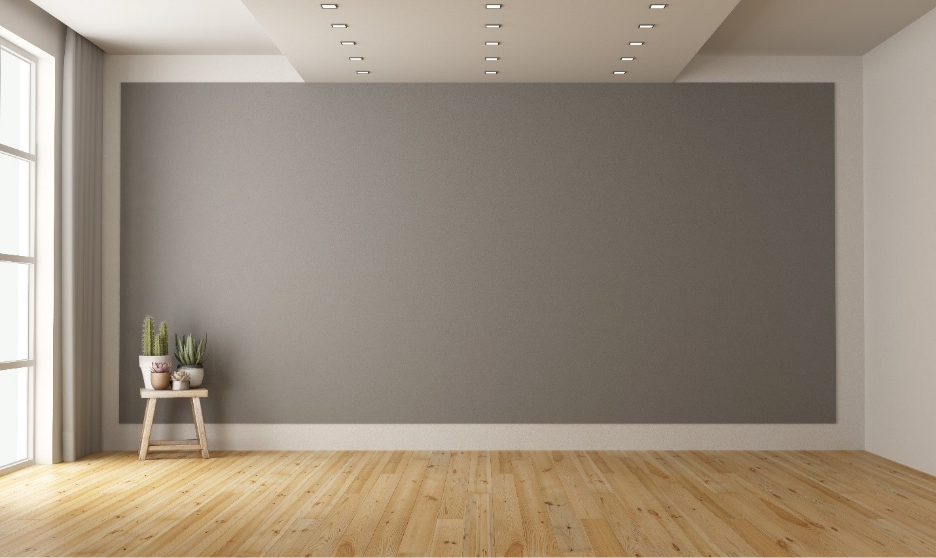
Start with what you can’t change. Your flooring, counters, furniture, and cabinets are staying put, so hold sample chips right up against them. A gray that flatters warm oak floors can clash with cool gray tile.
Then read your light. North-facing rooms pull grays cooler and usually want a warmer gray, while south-facing rooms can take a cool gray without it turning icy. East and west rooms shift as the day moves, so check your samples in the morning and again at night.
Last, let LRV tell you about depth. Higher numbers keep a room light and airy, lower ones add drama but can shrink a small space. Sheen counts too, since the same gray shifts noticeably between a flat and a satin finish.
Start with trim. A crisp white keeps things clean and lets the gray take center stage, while a soft off-white feels gentler and more traditional. For contrast, warm metals like brass and gold counter the coolness, and black hardware sharpens the whole look. Natural wood and a little greenery pull the same trick, adding warmth so the space never tips sterile.
As for pairing gray with actual colors, it gets along with nearly everything, which is half its appeal. Just keep undertones in the back of your mind. A cool blue-gray sits happily next to other cool tones, while a warm greige wants warm partners. Vista Paint’s color palette page has a compare tool that sets two shades side by side, which makes those undertone matches far easier to judge before you commit.
What Is the Most Popular Gray Paint Color?
Warm greige shades lead the pack right now, since they pair the flexibility of gray with the coziness of beige. Lady Nicole 0030 is a good example, neutral enough to work with almost any floor, counter, or cabinet.
Why Does My Gray Paint Look Blue or Purple?
That’s the undertone showing itself. Most grays lean slightly toward blue, green, or purple, and cool light pulls that undertone forward. Testing a large sample on the actual wall, at different times of day, is the only reliable way to see the undertone.
What Is the Difference Between Warm Gray and Cool Gray?
Warm grays carry beige or brown underneath, which makes a room feel cozy and inviting. Cool grays lean blue or green for a crisp, modern, sometimes cooler feel. The right one depends largely on your room’s natural light.
What Is Greige?
Greige is a blend of gray and beige. It reads as a soft, warm neutral that shifts between the two depending on the light, which is exactly why it’s become such a popular, easy-to-live-with choice.
Gray is an amazing, versatile color that can be used in a plethora of locations and still look great. A good gray can be a
Choosing kitchen paint colors: you want them to look stylish, but that is only part of what to consider. This is the room where you

Choosing a paint color can seem like a simple decision when you are looking to remodel a room or are moving into a new house.
Gray is an amazing, versatile color that can be used in a plethora of locations and still look great. A good gray can be a
Choosing kitchen paint colors: you want them to look stylish, but that is only part of what to consider. This is the room where you